
Stevens Point Neighbors by Source
A block lookup works best when each source has one purpose. The county map supplies land and boundary context. The city assessment search supplies the assessed owner and property fields. MyVote can answer a narrow registration question at a supplied address, and city civic records explain association boundaries or public activity. No source proves everyone who sleeps, receives mail, or spends time at a home.
| Source | What It Shows About a Block | Access |
|---|---|---|
| Portage County GIS | Parcel lines, addresses, roads, districts, neighboring parcel IDs and public attributes | Public ArcGIS hub; exact buffer controls were not documented |
| Stevens Point assessment search | Parcel, assessed owner, mailing address, property address, survey and limited history fields | Free city GCS search; assessor help for older data |
| Wisconsin MyVote | Registration lookup at a supplied address | Street, unit, city and ZIP; confidential limits apply |
| City neighborhood registry | Formal boundaries and civic notification context | Community Development and ordinance records; no member directory found |
| Sanborn maps and city directories | Past building footprints, uses, addresses and historic name clues | Library, archives and digital collections |
| Public meetings | Dated civic activity and named official roles | City or County Clerk records; role and date required |
Owners and occupants must remain separate. An assessment roll names the party assessed for a parcel. A mailing address may differ from the property address. Trusts, estates, agents, and remote owners also appear. For present Stevens Point neighbors, the map and roll create a parcel inventory, not a household roster.
Mapping Stevens Point Neighbor Parcels
The Portage County public ArcGIS hub is the geographic starting point. County research says all parcels are digital and public maps cover tax parcels, roads, addresses, zoning or land use, and municipal or voting boundaries. The public material did not confirm a live radius or buffer control, so use the visible parcel map and click outward rather than promising an unsupported tool.
- Enter or locate the known Stevens Point address and confirm the street, municipality, and parcel shape.
- Select each lot that touches the subject parcel, then the parcels directly across the street. Record parcel identifiers and displayed addresses.
- Check each city parcel in the assessment search. Record owner role, mailing address, property address, legal description, and the date of the roll.
- Mark every inference. A matching mailing and property address may support owner occupancy, but it still does not list all people in the home.
- For a complete named-street chain, move to the Stevens Point street directory method rather than expanding the block without limits.
The assigned Portage County GIS capture shows the local map hub used to begin a Stevens Point neighbors search.
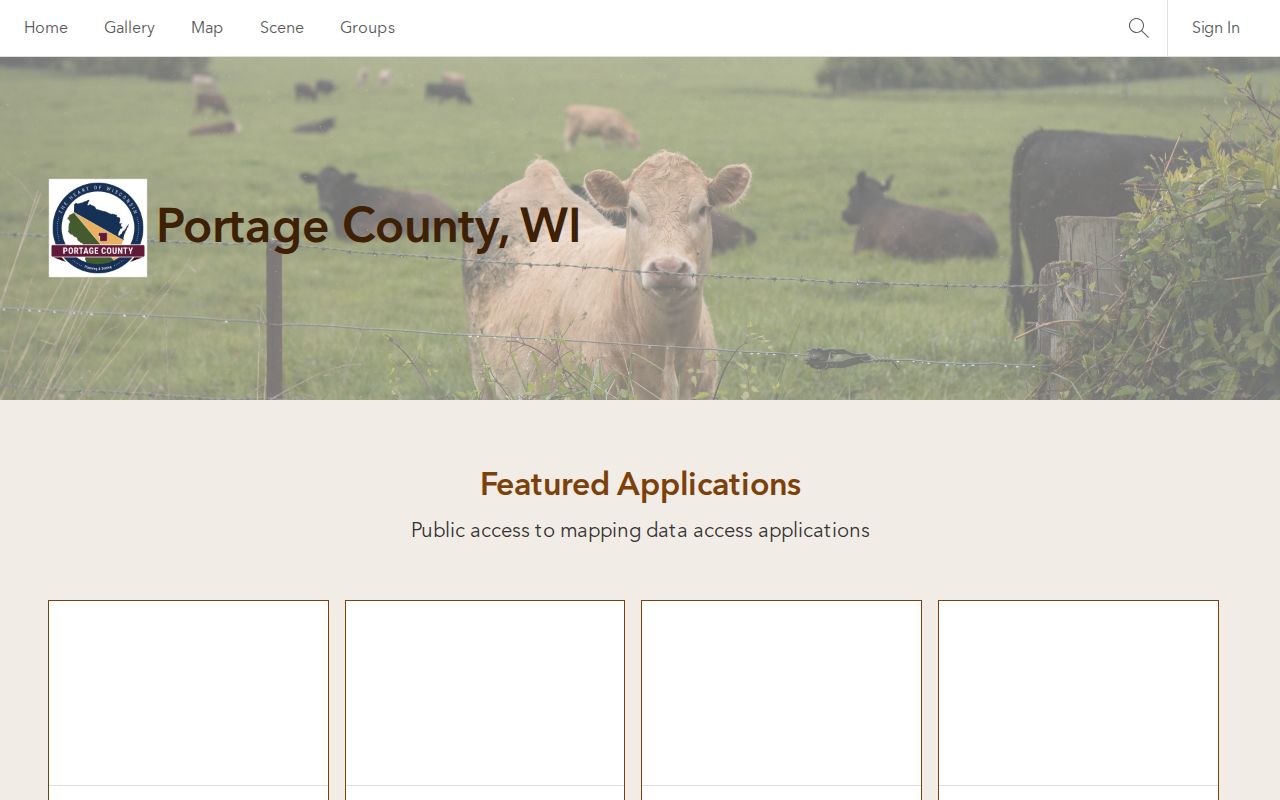
The image confirms the authoritative county mapping route. It should be used to identify public parcel context, not to claim an undisclosed resident or private routine.
Reading Stevens Point Block Ownership
The Stevens Point property search supports parcel number, owner last and first name, street number, street name and direction, subdivision, CSM, plat, block, lot, PLSS and historical-property options. Search a mapped parcel one at a time. The city parcel prefix used in state data is 281, but the city portal can require it to be removed. Preserve both forms in the research log.
A parcel is a legally described unit of land. The situs address is the physical property address, while the mailing address is where the owner receives notices. A plat is a recorded map that divides land into lots. These terms prevent a common block error: treating the tax mailing address as proof that the assessed owner lives next door.
When a property field is missing or old, contact the city assessor for ownership, sales, assessment, legal-description, land, building, or limited historical assistance. The county GIS can confirm shape and surroundings. The Register of Deeds holds the recorded instrument. Each handoff adds a different fact and date.
Note: A parcel owner may be a trust, estate, company, or person living elsewhere, so ownership never identifies every occupant.
Stevens Point Neighbor Voter Checks
Wisconsin My Voter Info accepts a name plus birth date or an address made from street, unit, city, and ZIP. The address route can test a specific electoral address after the parcel map fixes its spelling. It is not an open-ended block roster, and it should not be used to infer who chose which candidate.
Wis. Stat. §6.36 permits a public voter-registration list subject to limits. Public fields can include elector name, address, and voting history. Full birth dates, driver-license or state ID data, Social Security information, confidential addresses, and other protected fields are restricted. Confidential voter treatment under §6.47 can also affect what appears.
A registration date or voting history must be read on its own terms. Participation is not a ballot choice. A missing hit can reflect spelling, a unit format, registration timing, a move, or confidential treatment. For election-administration records, the Portage County Clerk and Stevens Point City Clerk are the official routes. Request a specific election, ward, notice, or date range rather than asking for everyone on a block.
Stevens Point Neighborhood Registry
Stevens Point has an unusually useful civic framework for neighborhood associations. A city memo says a qualifying group needs a formal name, approved boundaries, bylaws, a budget, regular meetings at least three times each year, and a board with at least three elected members, followed by Council approval. A city ordinance directs Community Development to maintain a neighborhood registry for notice and communication about development orders.
| Local route | What it can establish | Important limit |
|---|---|---|
| Community Development | Current registry, boundary, development-notice or qualification records | A boundary is not a household list |
| City Clerk | Council agendas, minutes, ordinances, notices and approvals | A named speaker or board member has a civic role, not proven residence |
| Old Main legacy page | Historical association name, campus-neighborhood context, meetings and newsletters | Current status, officers and boundaries were not confirmed |
No public member directory was found. Congregation, block-watch, and civic-club rosters also were not located as public resident indexes. Use public contact pages, newsletters, meeting notices, and the city registry only for what they disclose. The association layer can explain a block's civic identity, but it cannot identify all Stevens Point neighbors inside the boundary.
Official Stevens Point Neighbor Sources
Official records and commercial neighbor tools serve different roles. Government sources identify their custodian, field meaning, and record date. Commercial compilations may combine public extracts and other data without making the source trail clear. Convenience does not cure a stale address, a same-name collision, or an owner-versus-occupant error.
| Measure | Official local source | Commercial compilation |
|---|---|---|
| Origin | Named city, county, state, court, library, or archive | Mixed data sources may be unclear |
| Meaning | Fields tied to a defined public task | Labels may merge owner, occupant, and old address |
| Correction | Custodian has a record-specific process | Correction and update timing vary |
| Best use | Auditable block research with dates | Unverified lead only |
Start with the public parcel and assessment systems. If a record is missing, ask the proper custodian under Wisconsin Public Records Law, Wis. Stat. §§19.31–19.39. Portage County's NextRequest portal provides a tracked county route. A narrow request for a map, roll, permit, ordinance, or dated notice is more likely to return a useful record.
Historic Stevens Point Neighbor Blocks
Older blocks need a different set of sources. UWSP digitized Stevens Point and Portage County directories chiefly cover 1889 through 1921, and the Portage County Public Library keeps newspapers, yearbooks, family histories, directories, obituary material, and cemetery resources. Library databases can have location or Wisconsin-access limits. UWSP Archives is appointment-based, while the Portage County Historical Society accepts focused research requests.
The Library of Congress Sanborn collection includes Stevens Point sheets from 1884, 1891, 1898, 1904, and 1912. Those maps can show building footprints and uses along a block. A footprint does not prove that the same building survives now. Pair the sheet with a city-directory street section, a parcel or deed, and a dated source image.
Stevens Point's 1965 citywide renumbering is vital when old and new addresses disagree. The guide uses names from the 1964 Polk directory and gives present number, occupant, and new number. It took effect August 1, 1965. Use that bridge before deciding that two near-identical block searches refer to different properties. This is a practical geography problem, not a missing-neighbor mystery.
Stevens Point Neighbors in Civic Records
City Clerk records include agendas, minutes, ordinances, contracts, bonds, election records, licenses, notices, and special assessments. Community Development holds building, zoning, inspection, neighborhood-improvement, and development material. A permit may show an owner or building-land name, legal description, site address, plans, and survey. A complaint remains an allegation or enforcement lead until the record says otherwise.
Keep civic evidence apart from personal evidence. A petition, meeting attendance list, public board roster, neighborhood newsletter, or license can show participation in a dated public act. It does not by itself prove a home address. In the other direction, parcel ownership does not establish neighborhood leadership or attendance.
For a local-history view, UWSP's Hmong timeline indexes Stevens Point Journal and The Pointer items by title, newspaper, date, page, and description. It can lead to records of institutions, schools, businesses, migration, and community events. Full articles should be checked through the Archives. Use such sources to understand a block or institution, not to compile private details about individuals.
Privacy for Stevens Point Neighbors
Many facts about nearby homes remain private or absent from public indexes. Assessment records do not list every occupant. The city neighborhood registry is not a member list. Utility, delivery, and private household data are not public block directories. Courts, vital records, voter records, and public requests also apply their own statutory restrictions and redactions.
Wisconsin Safe at Home provides eligible participants with a substitute address. Never try to uncover the actual residence by joining it to another record. Protected voter treatment, sealed or confidential court matters, victim and witness rules, juvenile restrictions, and vital-record eligibility can also explain a missing or limited result.
Lawful use. Research Stevens Point neighbors only for lawful block history, civic curiosity, reconnecting, or personal safety. Do not use records to watch, harass, threaten, intimidate, or harm anyone.
Keep a short source log with the public office, record type, date, parcel or case identifier, and access date. Remove full birth dates, ID numbers, protected addresses, financial data, details about minors, and any fact the task does not require. An official omission is a limit to respect, not a gap to defeat.